
Monday, 30 May 2011

The first book group field trip and the books for June
So I hope everyone is looking forward to the Orange Prize for fiction shortlist readings on 6th June, two of the nominated books 'Great House' and 'Room' are ones we have read. Lets meet up beforehand to practise heckles....I jest.
In the meantime please read the 2 books for June


In the meantime please read the 2 books for June


Neil Gaiman - Neverwhere (courtesy of Heloise's top 5 books)
The Long Song- Andrea Levy.
The latter is probably THE book group book of the last year so I think we are a bit late in reading it, lets hope its a good one.
Thursday, 12 May 2011
2 months for the price of 1
Although the book group is going strong in reality I have neglected the blogging element for the last two months. You can blame a hectic life, sheer laziness or that I may or may not have lost 4 fingers in a mysterious accident. Now May is halfway through I have two fully functioning hands and a bit of time to spare. Let the book reviewing commence.


April brought us classic modern literature from two fantastic novelists; Margaret Atwood and David Mitchell. The novels 'The Blind Assassin' and 'Number9Dream' were two of the highest scoring and best received books since we started reading as a group.

Margaret Atwood's novel won the Man Booker Prize in 2000. It is a clever tale of the life of the main protagonist Iris Chase and her family interwoven with a science fiction story that was published posthumously by Laura Chase, Iris' sister after Laura commits suicide. The story engaged the vast majority of the group and received 8.1/10 (The highest so far). The group loved how the novel dealt with emotions and felt that the relationships and romance were believable and enjoyable to read about (unlike the Morse code/taxi driver/ foreskin regrowth issues in previous reads).
Margaret Atwood writes quite wonderfully about women and the complexity of all the female characters was another reason the group loved the book so much. The group members who had read other Atwood novels said that this was probably her best book. It was also thought that it was her most accessible The members of the group who had read this years Booker Prize winner (The Finkler Question) found the difference in the quality of the two novels laughable. Obviously the Man Booker Prize panel no longer has standards!! (in our opinion that is).
Moving on to another prize nominated read:

The novel is an exploration of belonging and identity set in modern day Tokyo. Personally I had never read a David Mitchell novel, and was put of with the thought that the narrative would be over complicated and fragmentary. Oh how wrong I was!
The novel was poignant, the lead character Eiji Miyake was one of the most likeable teenagers I've ever read about. His story was tragic, inspiring and often very, very funny. The group loved the video game style of some of his tales (however unrealistic they were). We also liked the relationship between Eiji and his twin sister. The only downside to the novel was a small sub-story about Goatwriter, Mrs Comb and a Neanderthal...randomness gone a bit too far. Apart from being terrified of getting mixed up with a ruthless Japanese gangster the novel really made me want to visit Japan. The score for this novel was an impressive 8/10. Putting it joint second of all time favourite 'Bookstrippedbare' reads. Well done number9dream.
NEXT! The May extravaganza
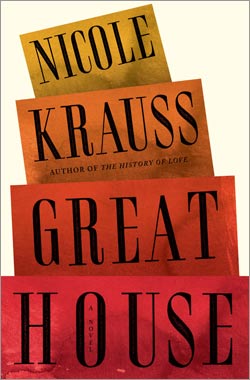
Ms Krauss....how are you feeling....depressed?....really?...we never would have guessed.
Great House is not a great joy to read. In fact its one of the most sombre and downbeat books we've ever had the pleasure (is that the right word) to pick up. O.k. maybe that's a bit harsh. The story revolves around a desk and how this desk has influenced the life of a few people over a couple of generations. The group felt on the whole that the book was trying to be too clever, and although it did have some very good plot twists and turns, on the whole that didn't make up for a self obsessed writing style and unlikeable characters.
The novel, nominated for the Orange Prize for women's fiction, featured weak and annoying female characters. The book was separated into four stories but the narrative was so similar throughout that we thought it was not done well at all. A disappointing 3.6/10
And finally...

On a personal note, I feel a bit of a failure- this is the first novel that I have not finished since the group started. I will use the group discussion with a little assistance from Wikipedia to do it justice.
The book was Claire's choice from her 5 Books of my Life, a new feature to The Book Stripped Bare. It is the tale of a very dysfunctional Midwestern American family. The family consists of Alfred Lambert, a retired railway engineer suffering from Parkinson's, his wife Enid and three grown up children. The novel looks at the lives of all the family and centres around them meeting for Christmas one last time as Alfred's health deteriorates. The group said that the family dynamics were interesting to say the least. The cruelty that was shown between family members was the reason some people like the book and some didn't like it so much. The group agreed that the end of the novel is much more enjoyable than the beginning (and at 672 pages, probably why I was unable to get through it). The book score and overall 6.3/10...not to shabby.
Thursday, 31 March 2011
March/april book(s)
Just a mini update. April 16th wetherspoons @ Bank circa 18:00. Prerequisite for attendance: having read The Blind Assassin by Margaret Atwood and/or Number9dream by David Mitchell.
Walking down the Crow Road
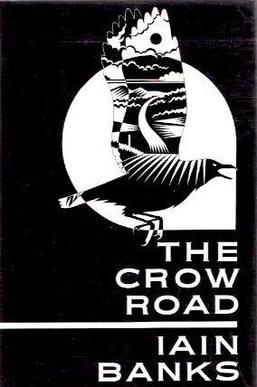
Firstly a belated thanks are in order for one of our new members. Thanks Sarah for your excellent hosting of the Scottish themed Iain Banks evening. An enjoyable read all round featuring a few extra special moments of morse code related joy!
Once we were all sufficiently stuffed of haggis, neeps and tatties (ok maybe Scottish shortbread, but we made the effort), the discussion revolved around the humour used and the themes of class and 'scottishness' that were prevalent throughout the novel.
All of us admitted that the book was very funny in places. The Crow Road is ultimately a mystery and coming of age novel rolled into one. The story was very dark and filled with black humour, death, loneliness and fragmented families. Prentice, the lead character, spent the novel estranged from his atheist father who was disappointed when Prentice 'rebelled' and discovered religion. Banks clearly used the novel to play around with more traditional Scottish views. Thatcherism, mostly a loathing of it, is also explored. The vivid descriptions of rural Scotland are littered with images of forgotten and abandoned industries.
The novel flicks between the generations of the central characters, that was a little hard to get used to but all made sense towards the end. Some of the group felt that the pace of the novel was a bit too slow through the middle.
The ending? Probably as happy and rounded an ending as you could expect from a novel as dark as The Crow Road is. I will leave out any references to the morse code sex scene as I can't type when I'm cringing.
What we liked:
The descriptions of Scotland
The importance of floppy discs
The humour
What we didn't like:
The pointless younger brother
The way the story of the father was developed
The morse code scene (or did we secretly love it?)
Monday, 7 February 2011
Ach ay' canny we read thi? - Iain Banks
Bringing some Scottish flavour to the group this month is the Iain Banks novel: The Crow Road

Who knows, if this goes well maybe Trainspotting next? I have to admit reading in the vernacular is one of my favourite things to do. Anyway, early reports about the novel are very positive, we are meeting on Friday 25th Feb, at the usual haunt.
Until then, lets get reading peoples...the countdown clock has started.
Who knows, if this goes well maybe Trainspotting next? I have to admit reading in the vernacular is one of my favourite things to do. Anyway, early reports about the novel are very positive, we are meeting on Friday 25th Feb, at the usual haunt.
Until then, lets get reading peoples...the countdown clock has started.
Madame Bovary and the magical Christmas disappearing act
After a prolonged absence February is THE month for the revival of The Book Stripped Bare.
Although a few select 'premium' members of the club read and thoroughly enjoyed 'The Bove'; the temptations of a mince pie and some mulled wine proved to much for many to handle. Madame Bovary is a bit of a slow starter, I enjoyed reading about French provincial life (probably watching too much of Disney's Beauty and the Beast as a child did that) and getting a feel for characters that seemed more caught up in the ideals of what life should be like rather than what is actually going on around them. For some of the group this was a bit tedious and they wanted the story to hurry up and start.
 The Bove, once it gets in the flow, is a great tragic novel with a perfectly flawed heroine for the reader to love and hate in equal measure. The desperation of Emma Bovary to escape her mundane life as a doctors wife, have the wild affair and handsome prince she 'certainly' deserves makes for a great story. As age takes it's toll on Madame Bovary her fixation on her dream life intensifies; throughout the second half of the novel she is teetering on the brink of madness (I diagnosed her with bi-polar by the second chapter!). The ending, unexpected and fabulous, will stay with me forever. As you can probably tell, I liked it...A LOT.
I love finding a classic novel that can resonate so much with modern day life. Literature showing us that human emotions have not evolved; dreams, desires and wishing for more than your lot in life is as apparent today as it was in Flaubert's mid Nineteenth Century 'Masterpiece' (??you decide).
My vote 9 out of 10...the rest of the group, read it and let me know.
Although a few select 'premium' members of the club read and thoroughly enjoyed 'The Bove'; the temptations of a mince pie and some mulled wine proved to much for many to handle. Madame Bovary is a bit of a slow starter, I enjoyed reading about French provincial life (probably watching too much of Disney's Beauty and the Beast as a child did that) and getting a feel for characters that seemed more caught up in the ideals of what life should be like rather than what is actually going on around them. For some of the group this was a bit tedious and they wanted the story to hurry up and start.
I love finding a classic novel that can resonate so much with modern day life. Literature showing us that human emotions have not evolved; dreams, desires and wishing for more than your lot in life is as apparent today as it was in Flaubert's mid Nineteenth Century 'Masterpiece' (??you decide).
My vote 9 out of 10...the rest of the group, read it and let me know.
Subscribe to:
Posts (Atom)