Anne Hathaway
by Carol Ann Duffy from The World's Wife
'Item I gyve unto my wife my second best bed ...'(from Shakespeare's will)
The bed we loved in was a spinning world
of forests, castles, torchlight, clifftops, seas
where we would dive for pearls. My lover's words
were shooting stars which fell to earth as kisses
on these lips; my body now a softer rhyme
to his, now echo, assonance; his touch
a verb dancing in the centre of a noun.
Some nights, I dreamed he'd written me, the bed
a page beneath his writer's hands. Romance
and drama played by touch, by scent, by taste.
In the other bed, the best, our guests dozed on,
dribbling their prose. My living laughing love -
I hold him in the casket of my widow's head
as he held me upon that next best bed.
Wednesday, 22 June 2011

Monday, 30 May 2011

The first book group field trip and the books for June
So I hope everyone is looking forward to the Orange Prize for fiction shortlist readings on 6th June, two of the nominated books 'Great House' and 'Room' are ones we have read. Lets meet up beforehand to practise heckles....I jest.
In the meantime please read the 2 books for June


In the meantime please read the 2 books for June


Neil Gaiman - Neverwhere (courtesy of Heloise's top 5 books)
The Long Song- Andrea Levy.
The latter is probably THE book group book of the last year so I think we are a bit late in reading it, lets hope its a good one.
Thursday, 12 May 2011
2 months for the price of 1
Although the book group is going strong in reality I have neglected the blogging element for the last two months. You can blame a hectic life, sheer laziness or that I may or may not have lost 4 fingers in a mysterious accident. Now May is halfway through I have two fully functioning hands and a bit of time to spare. Let the book reviewing commence.


April brought us classic modern literature from two fantastic novelists; Margaret Atwood and David Mitchell. The novels 'The Blind Assassin' and 'Number9Dream' were two of the highest scoring and best received books since we started reading as a group.

Margaret Atwood's novel won the Man Booker Prize in 2000. It is a clever tale of the life of the main protagonist Iris Chase and her family interwoven with a science fiction story that was published posthumously by Laura Chase, Iris' sister after Laura commits suicide. The story engaged the vast majority of the group and received 8.1/10 (The highest so far). The group loved how the novel dealt with emotions and felt that the relationships and romance were believable and enjoyable to read about (unlike the Morse code/taxi driver/ foreskin regrowth issues in previous reads).
Margaret Atwood writes quite wonderfully about women and the complexity of all the female characters was another reason the group loved the book so much. The group members who had read other Atwood novels said that this was probably her best book. It was also thought that it was her most accessible The members of the group who had read this years Booker Prize winner (The Finkler Question) found the difference in the quality of the two novels laughable. Obviously the Man Booker Prize panel no longer has standards!! (in our opinion that is).
Moving on to another prize nominated read:

The novel is an exploration of belonging and identity set in modern day Tokyo. Personally I had never read a David Mitchell novel, and was put of with the thought that the narrative would be over complicated and fragmentary. Oh how wrong I was!
The novel was poignant, the lead character Eiji Miyake was one of the most likeable teenagers I've ever read about. His story was tragic, inspiring and often very, very funny. The group loved the video game style of some of his tales (however unrealistic they were). We also liked the relationship between Eiji and his twin sister. The only downside to the novel was a small sub-story about Goatwriter, Mrs Comb and a Neanderthal...randomness gone a bit too far. Apart from being terrified of getting mixed up with a ruthless Japanese gangster the novel really made me want to visit Japan. The score for this novel was an impressive 8/10. Putting it joint second of all time favourite 'Bookstrippedbare' reads. Well done number9dream.
NEXT! The May extravaganza
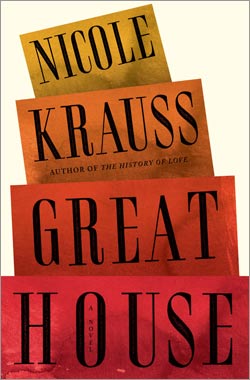
Ms Krauss....how are you feeling....depressed?....really?...we never would have guessed.
Great House is not a great joy to read. In fact its one of the most sombre and downbeat books we've ever had the pleasure (is that the right word) to pick up. O.k. maybe that's a bit harsh. The story revolves around a desk and how this desk has influenced the life of a few people over a couple of generations. The group felt on the whole that the book was trying to be too clever, and although it did have some very good plot twists and turns, on the whole that didn't make up for a self obsessed writing style and unlikeable characters.
The novel, nominated for the Orange Prize for women's fiction, featured weak and annoying female characters. The book was separated into four stories but the narrative was so similar throughout that we thought it was not done well at all. A disappointing 3.6/10
And finally...

On a personal note, I feel a bit of a failure- this is the first novel that I have not finished since the group started. I will use the group discussion with a little assistance from Wikipedia to do it justice.
The book was Claire's choice from her 5 Books of my Life, a new feature to The Book Stripped Bare. It is the tale of a very dysfunctional Midwestern American family. The family consists of Alfred Lambert, a retired railway engineer suffering from Parkinson's, his wife Enid and three grown up children. The novel looks at the lives of all the family and centres around them meeting for Christmas one last time as Alfred's health deteriorates. The group said that the family dynamics were interesting to say the least. The cruelty that was shown between family members was the reason some people like the book and some didn't like it so much. The group agreed that the end of the novel is much more enjoyable than the beginning (and at 672 pages, probably why I was unable to get through it). The book score and overall 6.3/10...not to shabby.
Thursday, 31 March 2011
March/april book(s)
Just a mini update. April 16th wetherspoons @ Bank circa 18:00. Prerequisite for attendance: having read The Blind Assassin by Margaret Atwood and/or Number9dream by David Mitchell.
Walking down the Crow Road
Firstly a belated thanks are in order for one of our new members. Thanks Sarah for your excellent hosting of the Scottish themed Iain Banks evening. An enjoyable read all round featuring a few extra special moments of morse code related joy!
Once we were all sufficiently stuffed of haggis, neeps and tatties (ok maybe Scottish shortbread, but we made the effort), the discussion revolved around the humour used and the themes of class and 'scottishness' that were prevalent throughout the novel.
All of us admitted that the book was very funny in places. The Crow Road is ultimately a mystery and coming of age novel rolled into one. The story was very dark and filled with black humour, death, loneliness and fragmented families. Prentice, the lead character, spent the novel estranged from his atheist father who was disappointed when Prentice 'rebelled' and discovered religion. Banks clearly used the novel to play around with more traditional Scottish views. Thatcherism, mostly a loathing of it, is also explored. The vivid descriptions of rural Scotland are littered with images of forgotten and abandoned industries.
The novel flicks between the generations of the central characters, that was a little hard to get used to but all made sense towards the end. Some of the group felt that the pace of the novel was a bit too slow through the middle.
The ending? Probably as happy and rounded an ending as you could expect from a novel as dark as The Crow Road is. I will leave out any references to the morse code sex scene as I can't type when I'm cringing.
What we liked:
The descriptions of Scotland
The importance of floppy discs
The humour
What we didn't like:
The pointless younger brother
The way the story of the father was developed
The morse code scene (or did we secretly love it?)
Monday, 7 February 2011
Ach ay' canny we read thi? - Iain Banks
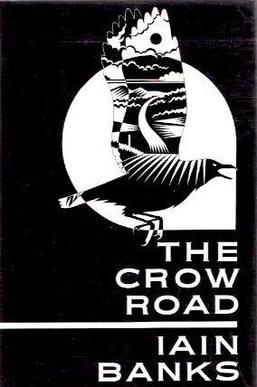
Bringing some Scottish flavour to the group this month is the Iain Banks novel: The Crow Road

Who knows, if this goes well maybe Trainspotting next? I have to admit reading in the vernacular is one of my favourite things to do. Anyway, early reports about the novel are very positive, we are meeting on Friday 25th Feb, at the usual haunt.
Until then, lets get reading peoples...the countdown clock has started.
Who knows, if this goes well maybe Trainspotting next? I have to admit reading in the vernacular is one of my favourite things to do. Anyway, early reports about the novel are very positive, we are meeting on Friday 25th Feb, at the usual haunt.
Until then, lets get reading peoples...the countdown clock has started.
Madame Bovary and the magical Christmas disappearing act
After a prolonged absence February is THE month for the revival of The Book Stripped Bare.
Although a few select 'premium' members of the club read and thoroughly enjoyed 'The Bove'; the temptations of a mince pie and some mulled wine proved to much for many to handle. Madame Bovary is a bit of a slow starter, I enjoyed reading about French provincial life (probably watching too much of Disney's Beauty and the Beast as a child did that) and getting a feel for characters that seemed more caught up in the ideals of what life should be like rather than what is actually going on around them. For some of the group this was a bit tedious and they wanted the story to hurry up and start.
 The Bove, once it gets in the flow, is a great tragic novel with a perfectly flawed heroine for the reader to love and hate in equal measure. The desperation of Emma Bovary to escape her mundane life as a doctors wife, have the wild affair and handsome prince she 'certainly' deserves makes for a great story. As age takes it's toll on Madame Bovary her fixation on her dream life intensifies; throughout the second half of the novel she is teetering on the brink of madness (I diagnosed her with bi-polar by the second chapter!). The ending, unexpected and fabulous, will stay with me forever. As you can probably tell, I liked it...A LOT.
I love finding a classic novel that can resonate so much with modern day life. Literature showing us that human emotions have not evolved; dreams, desires and wishing for more than your lot in life is as apparent today as it was in Flaubert's mid Nineteenth Century 'Masterpiece' (??you decide).
My vote 9 out of 10...the rest of the group, read it and let me know.
Although a few select 'premium' members of the club read and thoroughly enjoyed 'The Bove'; the temptations of a mince pie and some mulled wine proved to much for many to handle. Madame Bovary is a bit of a slow starter, I enjoyed reading about French provincial life (probably watching too much of Disney's Beauty and the Beast as a child did that) and getting a feel for characters that seemed more caught up in the ideals of what life should be like rather than what is actually going on around them. For some of the group this was a bit tedious and they wanted the story to hurry up and start.
I love finding a classic novel that can resonate so much with modern day life. Literature showing us that human emotions have not evolved; dreams, desires and wishing for more than your lot in life is as apparent today as it was in Flaubert's mid Nineteenth Century 'Masterpiece' (??you decide).
My vote 9 out of 10...the rest of the group, read it and let me know.
Friday, 26 November 2010
DECEMBER BOOK ANNOUNCED....READ ALL ABOUT IT!
The Book Stripped Bare is going to mid nineteenth century France for December 2010.
The scandalous Madame Bovary by Gustave Flaubert. I am open to suggestions at which translation. Perhaps if we just choose whatever one we want we can have a more varied discussion.
I quote from the back of my Penguin Popular Classics edition "Emma Bovary has become one of the greatest, and least conventional, heroines of fiction". Bring it on I say.
Date TBC- most likely around the middle weekend of December, so get reading.
The scandalous Madame Bovary by Gustave Flaubert. I am open to suggestions at which translation. Perhaps if we just choose whatever one we want we can have a more varied discussion.
I quote from the back of my Penguin Popular Classics edition "Emma Bovary has become one of the greatest, and least conventional, heroines of fiction". Bring it on I say.
Date TBC- most likely around the middle weekend of December, so get reading.
November 2010: The Finkler...What???

A quick synopsis without too many spoilers is probably necessary if I am to continue. The book centres on three men: the elderly Czech Jew Libor, a successful journalist who boasts of his friendships with Hollywood stars such as Marlene Dietrich and Marilyn Monroe, mourning after the recent death of his perfect wife Malkie with whom he had a committed and wonderful relationship. Samuel (Sam) Finkler another Jewish man, in his 50's with a successful career as a "philosopher" (writer of self help books and Z list celeb), also recently widowed, but unsure about the strength of his marriage prior to his wife dying. Finally, Julian Tresolve the non Jewish Jew wannabe (this is where it becomes complicated). University friend to Sam; Tresolve is a former BBC radio show producer and is working as a celebrity look-a-like throughout the majority of the novel. Tresolve is unable to hold down a relationship because he is, quite frankly, INSANE. Melancholic by nature, Julian is obsessed with Jewishness (he refers to Jews as Finklers...hence The Finkler Question), and thinks that his two friends have all that he aspires to because they are Jewish. Hence a story about nothing but these three men living in the aftermath the two deaths.
So...what did we think...
Why on earth did this book win the Booker Prize?
As a relatively young, non Jewish and mostly female group, in hindsight, this was never going to be the book for us. Although the main characters were well developed they were, for the most part, not likeable. Most of the good qualities of all of them had been completely hammered out by the end of the novel, so that when we finished the overwhelming opinion was 'thank God that's over'. We don't deny that the book was well written, if a little over embellished. The author does use comedy to give a confused yet probably accurate description of the state of 'Jewishness' in Britain today. Unfortunately the book is so long, that as 'Gentiles' the Jewish observations and arguments became a bit tedious and repetitive.
Now let us discuss the treatment of women in this novel. Boo Hiss Boo Mr Jacobson, we would not want to be your wife! This is a novel about men, for men. The female characters are mostly tools to highlight the masculinity and sexuality (or lack of) in the lead characters. Tresolve for the most part only falls in love with woman who he can see 'dying before him' in some Shakespearian tragedy. Sam's wife, Tyler was a converted Jew and hater of her husband, who cheated on her at every given opportunity, and she him. The two Jewish women in the novel are strong in a sense that they understand 'Jewish' behaviour, infidelity, their place in the home and just get on with it. We won't even get started on the WHOLE chapter dedicated to circumcision and penis obsession. That was way too much for us to bear!
So to sum up. Yes it is high brow, yes it probably appealed to all the middle aged men on the Booker panel, and YES it is a bit funny in a few places. It gave us a lot to talk about and even those who hadn't read the novel soon chipped in with opinions on identity and male sexuality (maybe that was just the wine talking). But the reality is that on the whole it was just too long and self obsessed for us to enjoy.
So far 4.5 out of 10 (Scores still being collated)
Wednesday, 24 November 2010
The story so far....
The Book Stripped Bare, as all of you reading this will probably know, is a forum for reading books, sharing opinions, and solving the problems of the world. OK, OK, it's just a little book group that meets once a month, at a local (cheap) pub, with a few strong views about a book of our choosing. World domination is on the cards though...one day.
So we have been up and running for 6 months now, survived a whole 1/2 a year, what better way to start the second half than to record our meetings on a Blog (that's where I come in).
Here is a quick catch up on all the books we have read so far and our opinions on them...
Boy A Jonathan Trigall

This book generally got the thumbs up from all book group attendees. It is a slightly (very) morbid story about the life of a child murderer after he is released from prison as a young adult, it is influenced by the James Bulger murder in the early 1990's. The story is great for a book group as it polarizes opinion and lends itself to lengthy and heated discussions. It is a breath of fresh air for those sick of reading the same things over and over again in the British media. However, the book did fall a little too heavy on the side of sympathy for most of us.
6.5 out of 10
Black Water Rising Attica Locke

We were expecting great things from this crime/civil rights history novel when one of the members (Emily) told us that she had heard the author speaking at Costa First Novel prize readings. Unfortunately it didn't live up to the hype and (unsurprisingly) it didn't win the prize. The story centres on a complex character who is defined by the racial tensions of his home town Houston and becomes embroiled in a thoroughly Texan oil dispute. A legal thriller...well legal yes...but we were not really thrilled in the slightest.
3 out of 10
The Bride Stripped Bare Nikki Gemmell

Bored of prize winning novels we decided to try something a little racy for the next month. 'Anonymous' Aussie author (oooh I love alliteration) Nikki Gemmell's attempt at ground breaking female insight seemed like a good place to start. Billed as the book to keep 'husbands on their toes' we struggled to see why. We were left a bit disappointed at the lack of originality in the plot and the exploits of 'the Bride'. The story never really got going, but the title, reworked obviously, became the new book group name...and so The Book Stripped Bare was born.
1 out of 10
Room Emma Donaghue

Back to the prize 'nominated' novels we went. If Boy A was morbid, this book was off the scale. Some of us LOVED it, some of us HATED it. A pretty equal balance making this the Marmite book of the group so far. For anyone who doesn't know, Room is told from the point of view of 5 year old Jack, who is locked in Room with his mother (Joseph Frizl style) he thinks that Room, his mother and its contents are all that exist. OK, so Emma Donaghue puts herself in the shoes of a 5 year old boy and assumes what he may be thinking, in the room and out of it. Some bought the story others didn't...the choice is yours
8 out of 10 (the score is so high as Emily can never finish a book on time)
How Far Can You Go? David Lodge

Discussing this book during a wine and cheese night where copious amounts of alcohol were consumed is making it difficult for me to remember what was said...I will try my best. The narrative follows a group of friends from university through to middle age, the common bond is Catholicism. Not an obvious book choice for some (me included) but on the whole the group found it interesting, funny and well written.
6.5 out of 10
So that is the story so far....the book for November was the Booker Prize winning 'The Finkler Question' we are meeting tomorrow, so until then....
Subscribe to:
Posts (Atom)